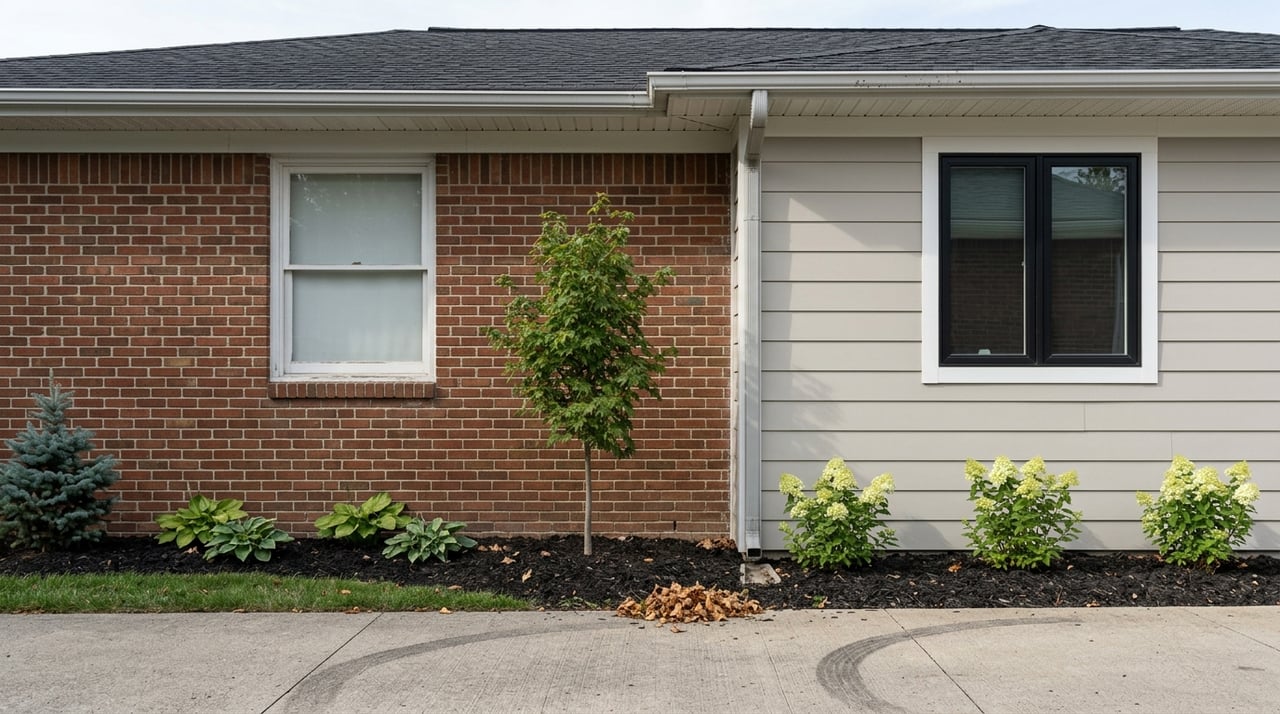
If you are torn between an older home and a newer one in Flushing, you are asking the right question. The right choice is not about which type is "better" across the board. It is about which home fits your budget, comfort level, and plans for the next few years. In this guide, you will see the real tradeoffs that matter in Flushing so you can make a smart, confident decision. Let’s dive in.
Flushing Has a Real Mix of Housing
Flushing is a compact city with 8,411 residents and 3.61 square miles of land area, according to the U.S. Census Bureau. It is also a mostly owner-occupied market, with a 78.4% owner-occupied housing rate and a median owner-occupied home value of $204,500 for 2020 through 2024.
That matters because you are not shopping in a place with just one type of housing stock. Flushing has a meaningful mix of older homes and later-built homes, which gives you more options but also makes comparisons more important.
Historical housing-age data shows that a large share of Flushing homes were built before 1980. Census 2000 data reported 15.0% built in 1939 or earlier, 20.5% in 1940 to 1959, 18.2% in 1960 to 1969, and 28.0% in 1970 to 1979.
What “Older” and “Newer” Mean in Flushing
In Flushing, an older home usually means a home built before 1970 or before 1978, often in the city’s more established areas. A newer home usually means postwar or later construction that fits more closely with current zoning patterns and more modern layouts.
That distinction matters for more than style. It often affects lot shape, maintenance needs, inspection strategy, and how predictable your year-one costs may be.
Why Buyers Love Older Homes
Older homes in Flushing often appeal to buyers who want character and a more established setting. The city’s Main Street Historic District includes buildings dating from 1850 to 1932, with styles such as Greek Revival, Italianate, Queen Anne, Colonial Revival, and Bungaloid.
Even outside the historic district, older homes can offer details that feel harder to find in more recent construction. You may notice distinctive exterior design, mature lots, and floor plans that create a different feel from newer builds.
The city’s zoning ordinance also recognizes older residential areas in a practical way. In the R-2 district, the code states that larger houses may be converted from single-family to two-family use to help extend the economic life of the structure and support repairs and modernization.
For some buyers, that creates a stronger case for value-add improvements over time. If you are comfortable with updates and want a home where strategic improvements may matter, an older property can be worth a closer look.
Older Homes Often Come With Lot Differences
One thing that surprises buyers is how much lot layout can vary in established parts of Flushing. Current zoning standards set minimum lot sizes and widths in residential districts, but the ordinance also allows legally existing lots to continue being used even if they do not meet current standards.
That helps explain why some older blocks may have smaller or more irregular lots than homes built under newer rules. It is not automatically a problem, but it is something you should understand before you make an offer.
If lot size, width, parking setup, or yard use matters to you, review those details early. A home can look great online but function differently once you understand the parcel and current zoning context.
The Biggest Tradeoff With Older Homes
The biggest tradeoff with older homes is age-related risk. Homes built before 1978 are more likely to have lead-based paint, and renovation, repair, or painting work can create lead dust.
That is why lead disclosure matters in a pre-1978 purchase. The EPA requires known lead-based paint information to be disclosed before the sale or lease of most pre-1978 housing, and buyers must have the opportunity to get an independent lead inspection.
Older homes can also bring a wider range of inspection findings simply because systems and materials have had more time to age. Roof condition, heating and cooling equipment, and exterior components may need closer review than you would expect in a later-built property.
This does not mean you should avoid older homes. It means you should go in with a clear plan, a realistic inspection budget, and a reserve for year-one repairs if needed.
Why Buyers Choose Newer Homes
Newer homes in Flushing usually appeal to buyers who want more predictability. Because later construction is often shaped by current zoning standards, lot geometry and site layout can be easier to compare from one property to another.
That can make your search feel more straightforward. If you value a simpler decision-making process, newer homes often reduce the number of unknowns.
Newer homes also remove one major concern tied to older properties. Homes built after 1978 are not part of the federal lead-disclosure framework that applies to most pre-1978 housing.
For many buyers, that alone lowers stress. If you want to focus less on age-related hazards and more on layout, finishes, and near-term upkeep, newer homes may fit your goals better.
Newer Homes Still Need Care
A newer home is not a maintenance-free home. Routine upkeep still matters, especially for heating and cooling systems, insulation, and air leakage.
That is why you should still treat the inspection process seriously. A newer property may have fewer age-related concerns, but you still want to understand the condition of major systems and any short-term maintenance needs before you commit.
In practical terms, the tradeoff is often predictability versus character. Newer homes usually shift your attention away from deferred maintenance and toward finish quality, landscaping, and operating costs.
How to Decide Which Fits You Best
The best way to choose is to match the home type to your priorities, not to someone else’s preferences. Start by being honest about how much work, uncertainty, and upfront cost you are comfortable taking on.
Here is a simple way to think about it:
- Choose older if character, established surroundings, and possible value-add potential matter most to you.
- Choose newer if lower near-term maintenance and fewer lead-related concerns matter most to you.
- Stay flexible if you care more about the specific property than the build date alone.
That last point is important. A well-maintained older home may fit you better than a newer home with layout compromises, and a newer home may be the better choice if you want fewer surprises in the first year.
Budget Beyond the List Price
No matter which type of home you choose, your real budget needs to go beyond the purchase price. In Genesee County’s 2024 apportionment report, Flushing’s total millage levied was 41.4394 mills for homestead parcels and 59.4394 mills for non-homestead parcels, with special assessment charges listed separately.
Because those figures are based on taxable valuation, the final carrying cost should always be checked on the specific parcel. In other words, two homes with similar prices may still have different monthly ownership costs.
The Census Bureau also reports a median monthly owner cost with a mortgage of $1,577 in Flushing. That gives useful context, but your actual payment will depend on the home, financing, taxes, insurance, and any repairs or updates you need to plan for.
Why Inspection Strategy Matters More in Older Homes
If you are buying an older home, the inspection contingency becomes especially important. An inspection clause means the offer moves forward only if the property’s condition is acceptable under the terms you agreed to.
That gives you room to evaluate condition before you are fully locked in. In a pre-1978 home, it also gives you time to weigh repair issues alongside potential lead-safe renovation costs if future work is needed.
This is where a clear plan matters. Instead of treating inspection results like a surprise, you can use them to decide whether to move forward, renegotiate, request credits, or walk away.
A Smart Flushing Buying Framework
If you want to simplify the decision, use this step-by-step framework:
- Set your comfort level for repairs and updates.
- Compare total monthly cost, not just list price.
- Check the build year and understand whether pre-1978 lead rules apply.
- Review lot details carefully, especially in older areas with legal nonconforming lots.
- Use a strong inspection strategy before making your final decision.
This kind of approach keeps you focused on fit, cost, and risk. It also helps you avoid falling in love with a home before you understand what ownership will really look like.
In Flushing, there is no one-size-fits-all answer. Older homes can offer charm, established surroundings, and improvement potential. Newer homes can offer a more predictable ownership experience and fewer near-term concerns. If you want help weighing the tradeoffs and building a strategy around your budget and goals, reach out to Jeremy Taljonick for clear, practical guidance.
FAQs
What is considered an older home in Flushing?
- In Flushing, older usually means a home built before 1970 or before 1978, often in more established parts of the city.
What is the biggest risk with older homes in Flushing?
- The biggest risk is age-related maintenance and, for most pre-1978 homes, a higher chance of lead-based paint concerns during renovation or repair.
Are newer homes in Flushing maintenance-free?
- No. Newer homes still need routine upkeep, including checks of heating and cooling systems, insulation, and air leakage.
Why do lot sizes feel different in some Flushing neighborhoods?
- Older parts of Flushing may include legally existing lots that do not match current lot area or width standards, which can lead to smaller or more irregular parcels.
How should you budget for a home in Flushing?
- You should budget for more than the list price by factoring in taxes, possible special assessments, monthly ownership costs, inspection expenses, and likely year-one repairs.
Why is an inspection contingency important when buying an older Flushing home?
- It gives you a chance to review the property’s condition and decide whether to proceed, renegotiate, or request credits before the purchase moves forward.
Is an older or newer home better for first-time buyers in Flushing?
- The better fit depends on your comfort with repairs, your budget reserves, and whether you value character more than predictability.